Maurice Joins the Army
- Sep 2, 2025
- 3 min read
In my previous blog, we left your intrepid ancestor as he was driving towards an army enlistment centre in Sherbrooke, Quebec. He had been called up for mandatory home defense under the National Resources Mobilization Act (NRMA).
Military records that I ordered through Library and Archives Canada pick up his story from here.

By the time Maurice showed up to report for duty in April of 1941, the war was not going well for our allies, so more recruits were needed. Consequently, his pocket-size physique no longer disqualified him to join the fighting forces. At a height of 5’3” and weighing in at 141 lbs he ‘inched’ past the minimum requirement of 5’ tall and 120 lbs.
And so began the first phase of basic training at Mission Training Complex # 43 in Sherbrooke, Quebec. Training would have included an introduction to military discipline and training in marching, handling firearms, ‘tactical maneuvers’ such as how to outflank enemy troops, and field survival, particularly in cold weather conditions.
Then under the terms of the NRMA, he would be deployed somewhere in Canada to keep our home shores safe and would not be expected to fight overseas. At least, that was the plan.
At the time, there was no conscription in Canada. Recruits called up under the NRMA would not be expected to serve overseas while those who enlisted under Active Service could. For reasons I don’t fully understand, NRMA soldiers like my father, who couldn’t give a rat’s you-know-what about defending Britain, received their basic training in the same cohort and ate in the same mess tent as those who had volunteered for Active Service. These were soldiers who stood ready to rush to Britain’s defense in Europe, proud bosoms heaving, ready to fight for King and country. Well, you get the picture. From what I’ve read, this mixture of NRMA soldiers and Active Service soldiers did not gel well.
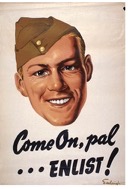
I’ve read about pressure tactics that were used to ‘persuade’ the NRMA soldiers (not affectionately called Zombies) to enlist, “go Active” and be ready to serve overseas. NRMA soldiers like my father were the object of blatant discrimination, emotional and physical abuse. They were assigned menial, unpleasant duties, denied leave and handed extra duties. They were taken on marches without proper equipment or water. Officers and non-commissioned officers (NCO’s) turned a blind eye.
Finally, after basic training was completed, Active Service soldiers could choose where in Canada they would be stationed. Most chose to be close to home. NRMA soldiers were not given a choice. Many ended up being stationed far from home.
The message was clear. ‘Go Active’ or face the consequences.
I wonder how my father would have fared in this environment. Recalling the abuse he suffered while growing up, and his sensitive nature, how would he have endured these pressure tactics? And even though Canada was not yet sending ground troops to Europe, ‘going active’ meant that he would be among those sent to fight should the call be made. And you may recall that conscription was a huge issue amongst French Canadians at that time. We did not want to be forced to defend our historical enemies – France who had abandoned us, and Britain who had defeated us. I can imagine my father’s motivation to become ‘active’ would be completely non-existent.


And yet on May 30, 1941, only 42 days into his service under the NRMA, my father signed up for Active Service. He never spoke much about his experiences in the military. So, I can only surmise that he didn’t choose this path but succumbed to the bully tactics to join up. It was, quite literally for my father, downhill from there.


I am absolutely fascinated with your blog! I think you have done excellent research into the Lebeau family and have written it up very eloquently.
War… it’s more than the game of cards:(